
Last updated October 31, 2026
 Home additions & ADU
 Kitchen remodeling
 Bathroom remodeling
 Roofing
 Windows & doors
 Driveway & pavers
 Fence
Free written scope consultation - allowances, timeline, and change-order rules on paper before a single trade is scheduled
Construction Emergency Preparedness Guide for San Mateo Homes
When a pipe fails behind a wall or a roof deck gets breached mid-storm, the homeowner decisions made in the first 60 minutes determine whether insurance pays, and how much remediation is needed afterward. Most construction emergencies in San Mateo don’t start with dramatic explosions or towering flames. They start quietly. A slow drip behind the water heater. A roof penetration that opens during a January atmospheric river. A sewage lateral that backs up into the downstairs bathroom at 7 a.m. on a Tuesday. This guide is written from the perspective of a general contractor that has walked through hundreds of San Mateo homes after the first hour went well, and after it went wrong, and complements our Construction Warning Signs: A San Mateo Homeowner’s Reference Guide. You’ll learn the first-response protocol for four common construction emergencies, how to document damage so adjusters take you seriously, what to have on hand before the next storm season, and how to spot the contractor patterns you should reject before they ever step foot on your property.
Quick Answer
Construction emergency preparedness for San Mateo homes means knowing where your water shutoff, gas meter, and electrical panel are before something fails, documenting damage immediately with time-stamped photos and video, and having a written protocol for the four most common failures: roof breaches, burst pipes, drainage problems, and gas line concerns. The best time to prepare is not during the emergency, but the weekend before storm season arrives.
Styles & brands we work with
Table of Contents
- The First 60 Minutes: Active Roof Leak Protocol
- Burst Pipe and Hidden Water Damage: What to Do Before You Call Anyone
- Foundation Drainage Failure: The San Mateo-Specific Problem
- Gas Line Concerns: When to Evacuate and When to Ventilate
- Insurance Documentation: What Adjusters Actually Look For
- Storm Season Preparation: A San Mateo Homeowner’s Checklist
- California Contractor Licensing and the Storm Chaser Problem
- The Emergency Data Sheet: Prepare It This Weekend
The First 60 Minutes: Active Roof Leak Protocol
During a heavy storm in San Mateo, a roof breach is the most common construction emergency we respond to, and the homeowner actions in the first hour make a measurable difference in both remediation cost and insurance outcomes. Water travels. It enters through a cracked tile or failed flashing and runs along the roof sheathing until it finds a seam, a nail hole, or a junction box, then drips somewhere far from the point of entry. The stain on your ceiling rarely aligns with the actual breach.
Here is the protocol we recommend, in order:
- Contain what you can see. Place a bucket or plastic bin under the drip. If the ceiling is sagging, water is pooling in the drywall. Pierce the sag with a screwdriver to release the water in a controlled location rather than letting the weight of the water collapse a larger area. Put the bucket directly under the puncture.
- Tarp only if safe. If you can safely access the roof and know where the breach is, a tarp secured with furring strips will stop most active infiltration. If the roof is steep, wet, or you don’t have proper fall protection, do not go up. A fall from a two-story San Mateo roof is a far more serious emergency than the leak itself.
- Move valuables and electronics. Water follows gravity. Check the room directly below the leak and the room below that. Move furniture, rugs, and electronics out of the water path.
- Cut power to the affected area if water is near fixtures. If water is dripping near a light fixture, ceiling fan, or outlet, turn off the breaker to that room. Water and electricity do not mix, and the circuit will need to dry before being re-energized.
- Document before you move anything else. Take photos and video of the active leak, the water path, and any visible damage. We’ll cover documentation specifics later, but this is the moment to start.
Roofs in San Mateo take material abuse that other climates don’t see. The marine layer means roofs stay damp for months. Moss accumulates on north-facing slopes. Flat and low-slope roofs on mid-century San Mateo homes, particularly in the Aragon and San Mateo Park neighborhoods, fail at seams and scuppers rather than at shingles. When you select a roofing system, whether GAF or Owens Corning asphalt shingles or a standing-seam metal roof, the installation details around penetrations matter more than the shingle itself. We’ve seen premature roof failures on homes less than 10 years old because the flashing at a plumbing vent or skylight was installed with roofing cement instead of proper metal flashing.
Burst Pipe and Hidden Water Damage: What to Do Before You Call Anyone
A burst supply line behind a wall in a San Mateo home can release 6 to 12 gallons per minute depending on line diameter and pressure. In 20 minutes, that’s 120 to 240 gallons of water inside wall cavities, under flooring, and potentially into the subfloor structure. The damage is not just what you see. It’s what’s happening inside the wall cavity and under the slab or crawl space.
The homeowner protocol for a suspected burst pipe:
- Shut off the main water supply immediately. In most San Mateo homes, the main shutoff is at the street, near the water meter, or where the main line enters the house, often in the garage or a crawl space access. Know where yours is before you need it. If you cannot locate it, call a plumber and tell them it’s an active leak so they can shut off water at the curb stop.
- Shut off the water heater. If the leak is on the hot water side or you cannot tell, turn the water heater to pilot or off. An empty tank with a live heating element fails quickly and can become a fire hazard.
- Open the lowest faucet. This drains remaining water from the lines and reduces additional leakage.
- Move water away from the foundation. If water is pooling near the foundation or penetrating into a crawl space, use a wet/dry vac, mop, towels, anything to move it away. Foundation saturation in San Mateo’s clay-heavy soils leads to expansion and movement, compounding the original problem.
- Document before demolition. Take photos of the water path, any visible wall staining, baseboard swelling, or floor cupping. Do not open the wall yet. Your insurance adjuster will want to see the initial conditions.
The repair often requires more than patching the pipe. The wall cavity must be opened, dried, and inspected for mold growth or structural compromise. Insulation saturated with water loses its R-value. Wiring that has been submerged or sprayed needs evaluation before re-energization. In older San Mateo homes with galvanized steel supply lines, a burst in one section often signals corrosion throughout the system. Replacing a single section may be a temporary fix. We tell homeowners the same thing every time: if your home has original galvanized plumbing and one section failed, start planning for a full repipe using PEX or copper. The brands you choose matter less than the installation quality, but fixtures from Delta or American Standard give you a documented warranty path if a replacement part fails later.
Foundation Drainage Failure: The San Mateo-Specific Problem
San Mateo sits on a mix of soil types, but significant portions of the city have expansive clay that swells when saturated. When foundation drainage fails, the symptom is rarely dramatic. It’s a door that starts sticking. A hairline crack that widens. A musty smell in the crawl space. By the time water visibly ponds against the foundation, the soil has already expanded and shifted.
Drainage failures in San Mateo typically fall into three categories:
- Clogged or failed foundation drains. Older homes, particularly those built before 1970, often have clay tile or bituminous fiber pipe French drains at the footing level. These collapse, fill with silt, or get infiltrated by roots. Once they fail, water sits against the foundation wall.
- Downspout discharge too close to the house. A single downspout discharging against a foundation can direct hundreds of gallons of roof water into the soil within a few feet of the footing during a heavy storm.
- Improper grade or hardscape slope. Concrete patios, walkways, and pavers installed without adequate slope direct water toward the house rather than away from it.
- Redirect downspouts with temporary extensions. Even a few feet of flexible drain pipe pushes water far enough away from the foundation to reduce immediate saturation.
- Clear the nearest storm drain or swale. Debris that blocks the drainage path turns a minor issue into a flooding event within minutes.
- Document water levels, mud lines, and any new cracks. Photos with a reference object, like a tape measure, help establish baseline conditions for an adjuster or contractor.
- Do not pump water out of a crawl space without understanding where the water is coming from. If groundwater is rising from saturated soil, pumping creates a differential pressure that can actually pull more water in.
- Strong gas odor inside the home: Evacuate immediately. This is a utility emergency, not a construction problem.
- Faint gas odor outside near the meter: This may be a slow leak at a fitting or the regulator vent. Call PG&E. They will investigate at no cost to the homeowner.
- No odor but visible damage to a gas line: This happens during excavation, foundation work, or seismic movement. If you see a damaged line, even without odor, turn off the gas at the meter if you can safely do so, and call PG&E.
- Carbon monoxide alarm sounding: This is a combustion appliance issue, not a gas line leak. Evacuate, call the fire department, and have your furnace or water heater inspected before re-entering.
- Time-stamped photos and video taken immediately. Metadata matters. Your phone’s clock establishes when the damage was discovered. Take wide shots that show the context of the room and close-ups that show the specific damage.
- Documentation of mitigation actions. If you shut off the water, tarped the roof, or moved furniture, document that too. Photos of the tarp in place, the water main turned off, or the bucket under the leak prove you acted responsibly.
- Keep damaged materials until the adjuster sees them, if possible. Pulled-up carpet, cut-out drywall, removed insulation. These are evidence. Throwing them away before the adjuster inspects them is one of the most common homeowner mistakes.
- Keep receipts for every emergency expense. Tarps, wet/dry vac rentals, plywood, temporary plumbing. All of it may be reimbursable under your policy’s mitigation coverage.
- Get a contractor’s written assessment of the scope before you do any permanent repair. The adjuster will compare their field assessment against the contractor’s scope. A detailed, itemized contractor estimate from a licensed general contractor carries weight.
- Making permanent repairs before the adjuster sees the damage. Patching drywall or replacing flooring removes the evidence. The adjuster cannot verify what they cannot see.
- Doing your own demolition without documenting the conditions. If you tear out the wet drywall before taking photos, the claim becomes a negotiation instead of a verification.
- Waiting to report the claim. Most policies require prompt notification. A two-week delay creates doubt about the cause and severity.
- Using a contractor who inflates the estimate beyond what the damage supports. Adjusters see this constantly. A credible, itemized estimate from a general contractor in San Mateo is more likely to be approved than a vague lump-sum number.
- Clean gutters and downspouts in October and again in January. San Mateo’s proximity to mature trees means pine needles, leaves, and debris accumulate quickly.
- Check for loose, cracked, or missing roof tiles. A visual inspection from the ground with binoculars is often enough to identify obvious problems.
- Inspect flashing around chimneys, skylights, and vents. These are the most common leak points long before the shingles fail.
- If your roof is over 20 years old, schedule a professional inspection before the first major storm.
- Test your main water shutoff valve. Open and close it a few times to make sure it works. A valve that is frozen open is useless in an emergency.
- Locate and clear all storm drains near your property. A blocked storm drain on a San Mateo street can flood entire blocks and back up into homes.
- Check sump pump operation if you have one. Pour water into the sump pit and verify the pump kicks on and discharges properly.
- Verify downspout extensions discharge at least 5 feet from the foundation.
- Map your electrical panel. Label each breaker clearly, and identify which circuits serve critical areas.
- Locate your gas meter and know how to shut it off. The shutoff valve is on the pipe next to the meter. A crescent wrench stored near the meter is a good idea.
- Test GFCI outlets in kitchens, bathrooms, and exterior locations. These protect against ground faults that become more dangerous in wet conditions.
- Two 10 x 12 tarps with furring strips and roofing nails. Heavy-duty tarps, not the blue poly kind that tears in wind.
- A wet/dry vac that works. Test it before you need it.
- Duct tape, Teflon tape, plumber’s tape, and a basic plumbing wrench set.
- A bucket that does not leak. This sounds obvious, but you would be surprised how many buckets have hairline cracks from sitting in a garage for years.
- Contractor contact information written down on paper, not just saved in a phone with a dead battery. We recommend having the contact for at least two contractors, one plumber, and one electrician.
- Anyone going door to door offering unsolicited inspections. Legitimate San Mateo contractors are busy after a storm. They are not knocking on doors looking for work.
- Anyone who asks for a large deposit before any work begins. California law limits down payments to 10% of the contract value or $1,000, whichever is less, for most residential contracts.
- Anyone who cannot provide proof of workers’ compensation insurance and a California contractor’s license. Request both. Verify both. If they hesitate, end the conversation.
- Anyone who wants to start work without a written contract. No written contract, no work. The contract must include the scope, price, payment schedule, and license number.
- Anyone who offers to waive your insurance deductible. This is illegal in California and a red flag for fraud.
- Anyone with out-of-state plates, a P.O. box address, or a phone number that does not ring to a physical business. Legitimate contractors in San Mateo have addresses, permanent offices, and established reputations.
- Main water shutoff location: Describe where it is. Is it at the street? In the garage? In the crawl space? What tool is required? If it’s a lever, say so. If it’s a round valve requiring a key, note where the key is stored.
- Gas meter location and shutoff instruction: Where is the meter? Which direction turns it off? Where is the wrench?
- Electrical panel location: Where is the panel? Which breakers serve which rooms? Is there a subpanel?
- Emergency contacts: Plumber, electrician, general contractor, insurance agent, and a neighbor. Names and phone numbers.
- Permit history: A list of major permitted work done on the home, with dates. This helps a contractor or adjuster understand what was original and what was modified.
- Insurance policy number and claims phone number. The 24-hour claims number is different from your agent’s office number. Write down both.
- Water heater type, location, and shutoff instruction. Tank or tankless? Gas or electric? Where is the shutoff?
- Any known quirks: Does the main line run under the driveway? Is the crawl space inaccessible from inside? Are there shutoff valves that do not fully close? Note all of it.
If you see water ponding near your foundation after rain, do this in the first hour:
The permanent fix requires a drainage system designed for your specific soil and grade conditions. A sump pump with a proper discharge location may solve interior groundwater. Exterior French drains, regrading, and in some cases retaining walls address surface water. Hardscape elements from manufacturers like Belgard or Unilock can be installed with the correct slope to direct water away from the structure. The point is that drainage is a system, not a single component, and the solution depends on where the water is entering.
Gas Line Concerns: When to Evacuate and When to Ventilate
Gas line concerns in San Mateo homes need a clear-headed response before anything else. Natural gas has an odorant added, mercaptan, that smells like rotten eggs or sulfur. If you smell gas inside your home, the protocol is simple: evacuate, and call PG&E from outside the house. Do not flip light switches. Do not unplug anything. Do not use a phone inside. Do not open windows or doors. Leave, and call from your cell phone at least 30 feet away, or from a neighbor’s home.
Here is the distinction that matters:
After any gas line repair or replacement, the work must be pressure-tested and inspected by the city of San Mateo, as covered in Construction Permits, Codes & Inspections in CA: What You Need to Know. This is non-negotiable. Any contractor who suggests skipping the inspection is not someone you want working on your home.
Gas line replacement in older San Mateo homes often becomes a bigger project than a simple patch because older homes used threaded steel pipe that corrodes over time. Modern replacement typically uses CSST (corrugated stainless steel tubing) or polyethylene for underground runs. The materials are reliable, but the installation and testing protocol is what protects your family. We use licensed plumbing subcontractors for this work. Gas is not the trade to experiment with.
Insurance Documentation: What Adjusters Actually Look For
The insurance claim process starts the moment you discover damage, not when you file the claim. What you document in the first hour, and what you do not do, has a direct effect on whether your claim is approved and how much is paid.
Adjusters look for evidence that confirms: the cause of loss is covered, the damage is real and not pre-existing, and the homeowner took reasonable steps to prevent further damage. Here is what works:
The homeowner actions that reduce a claim are just as important:
For major damage, we recommend bringing in a water damage restoration company that specializes in insurance claims. They document moisture readings, create drying logs, and use the same software language that adjusters understand. The cost of professional documentation is often recovered entirely through the claim.
When you’re ready to rebuild, having one contractor handle everything from the water-damaged drywall to the kitchen cabinets makes the process simpler than coordinating half a dozen specialists. The General Contractor in San Mateo who manages the rebuild can also validate that the remediation was done properly before finish work begins.
Storm Season Preparation: A San Mateo Homeowner’s Checklist
Storm season in San Mateo runs from November through March, and the difference between a manageable incident and a construction emergency often comes down to what was checked in October. Here is a checklist based on what we see in San Mateo homes every winter:
Roof and Gutter System
Water Management
Electrical and Gas
Emergency Materials
Preparing before the storm is not about fear. It’s about reducing the number of decisions you have to make when the roof is leaking and the power is out. The fewer decisions, the better those decisions will be.
California Contractor Licensing and the Storm Chaser Problem
After every major storm or seismic event in California, out-of-state contractors arrive. They knock on doors. They point at your roof and say it needs to be replaced today. They offer a discount if you sign right now. And then they take your deposit and leave the state, or they do work that fails inspection and you never see them again.
California requires any contractor performing work over $500 in labor and materials to hold a license from the Contractors State License Board (CSLB). This includes roofing, plumbing, electrical, and general building contractors. The license number must be on every contract, every vehicle, every advertisement. You can verify any license at the CSLB website in under a minute.
Here is what to reject immediately after a major weather event:
For emergency repairs, like tarping a roof or shutting off water, the urgency is real. But urgency is not a reason to skip verification. A legitimate contractor will have their license number on their truck and their business card. Verifying takes 60 seconds on your phone. Do it.
The same discipline applies to the rebuild. Your Home Remodeling in San Mateo project, whether it’s repairing storm damage or a planned renovation, deserves a contractor you can verify. The CSLB has a complaint history for every licensee. Check it.
The Emergency Data Sheet: Prepare It This Weekend
Every home should have a single sheet of paper, laminated, stored in a known location, that contains the information you need during an emergency when you cannot think clearly. Here is what it includes:
Post the sheet inside a kitchen cabinet door, next to the electrical panel, or on the inside of the garage door. Text a photo of it to every adult in the household. Store a copy in your email or cloud storage. The point is that in the first 60 minutes of an emergency, you should not be looking for this information. It should already be in front of you.
We walk through this sheet with clients during Home Renovation in San Mateo projects, because the moment the walls are open or the systems are exposed is the ideal time to document what is behind them. If you’re planning a renovation anyway, use that opportunity to photograph everything inside the walls before they get closed back up. Those photos are worth their weight in gold if a future problem occurs.
Common Mistakes to Avoid
- Not knowing where the water shutoff is. The single most preventable cause of catastrophic water damage in San Mateo homes. Find it this weekend. Test it. Teach every adult in the house where it is.
- Doing demolition before documentation. Tearing out the wet drywall or pulling up the soaked carpet before taking photos destroys your insurance evidence. Document first, then remove.
- Hiring the first contractor who knocks on the door. After a storm, storm chasers appear. Verify licensing, insurance, and local presence before anyone starts work.
- Using extension cords as a permanent solution after an electrical issue. If a circuit failed, the failure happened for a reason. Running extension cords to bypass the problem creates a fire hazard.
- Ignoring small drainage problems. That downspout discharging next to the foundation is not a small issue. It is saturating the soil around the footing every time it rains, and San Mateo clay expands when wet.
- Assuming the insurance company will find you a contractor. The insurance company’s adjuster assesses damage. They do not build the repairs. Your choice of contractor determines the quality of the rebuild.
- Waiting until an emergency to collect contractor recommendations. Good contractors in San Mateo are busy. Build the relationship before you need it, not after the pipe bursts.
See the difference
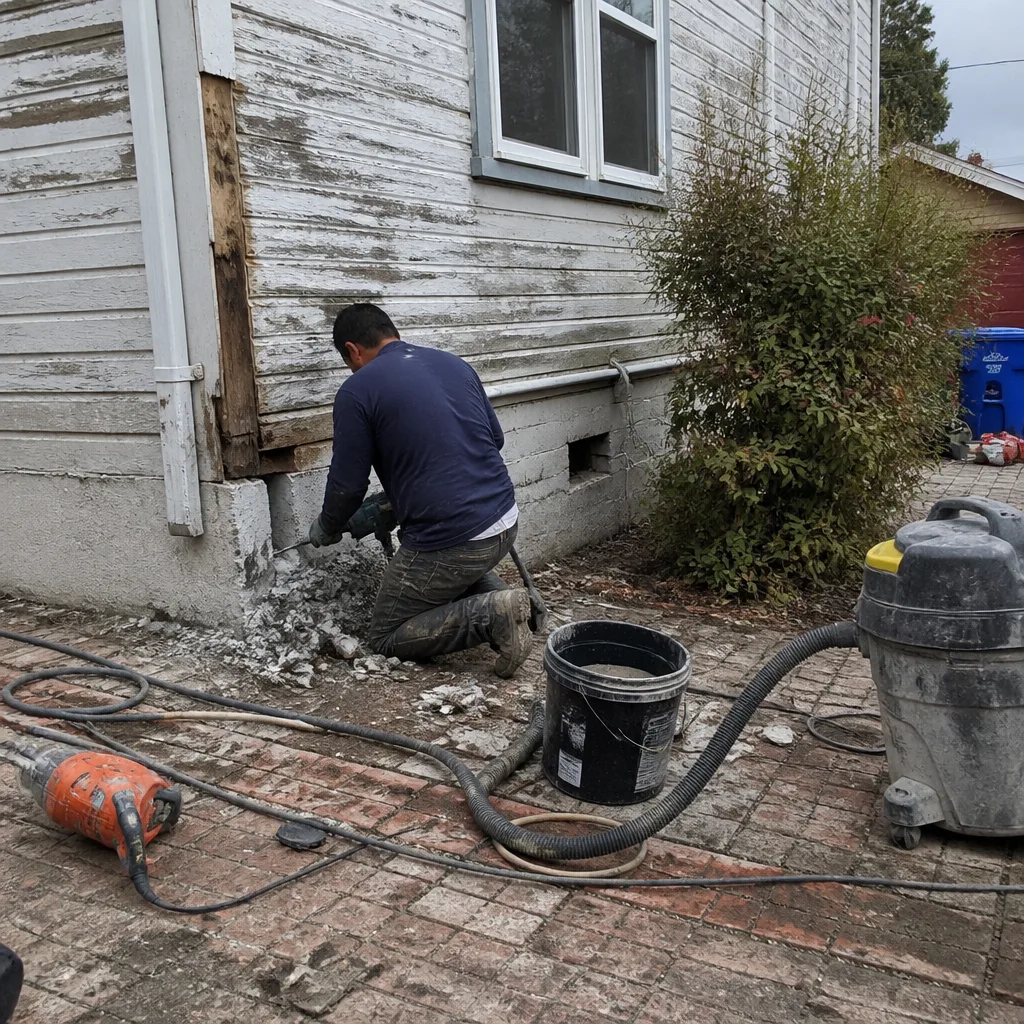 Before
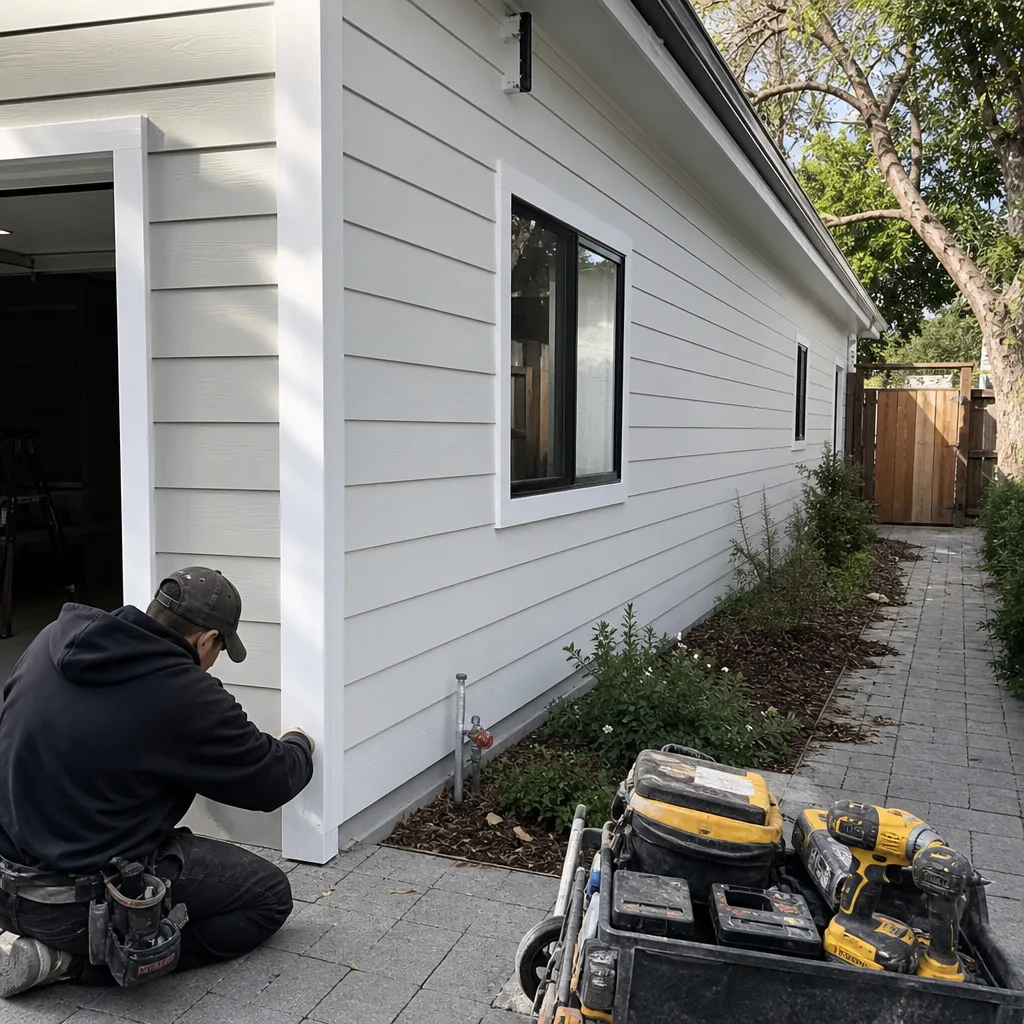 After
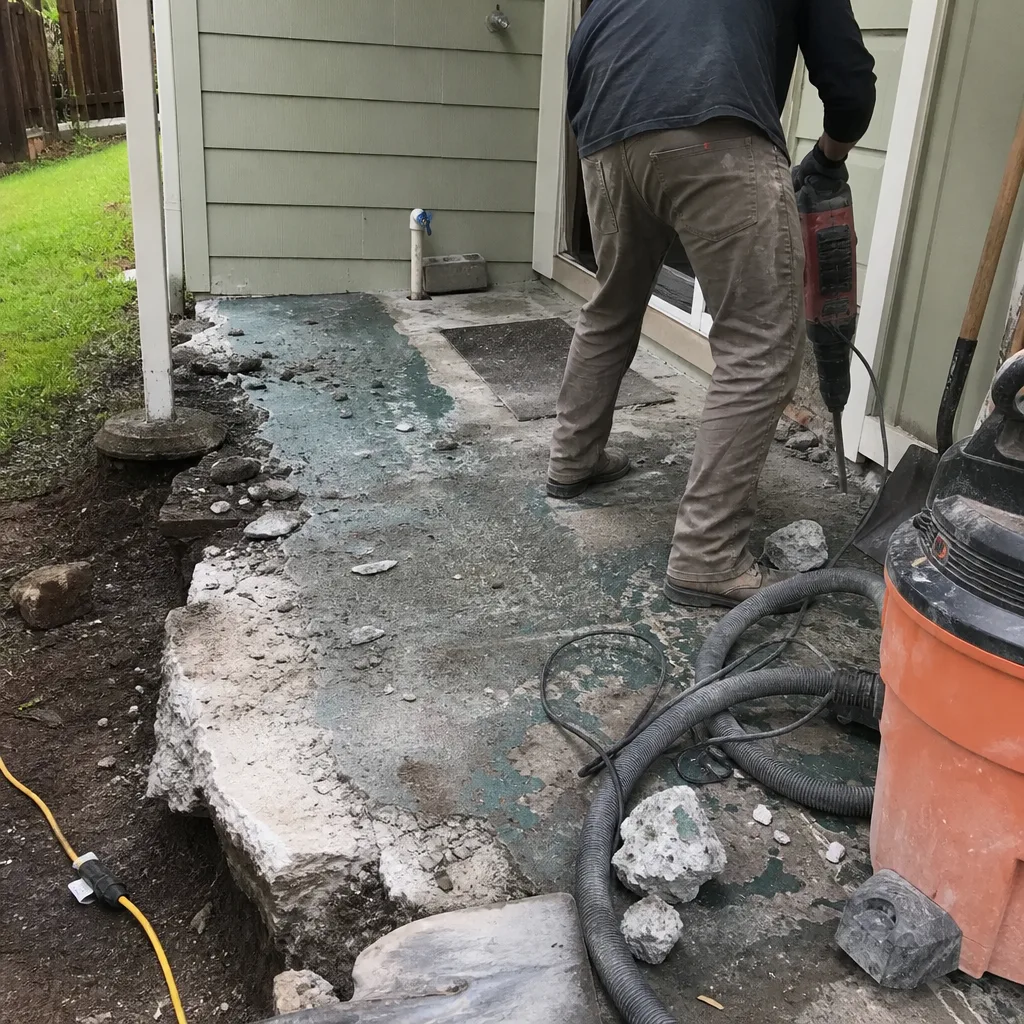 Before
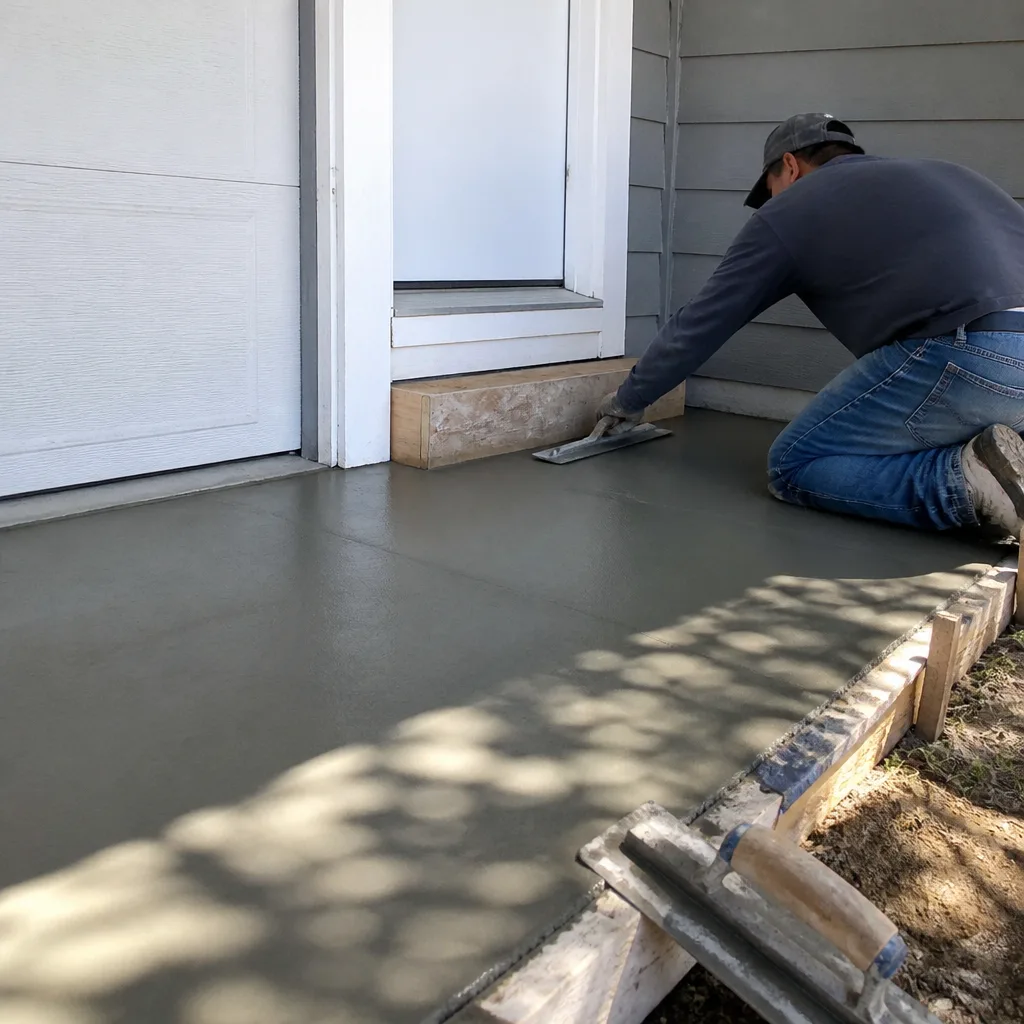 After
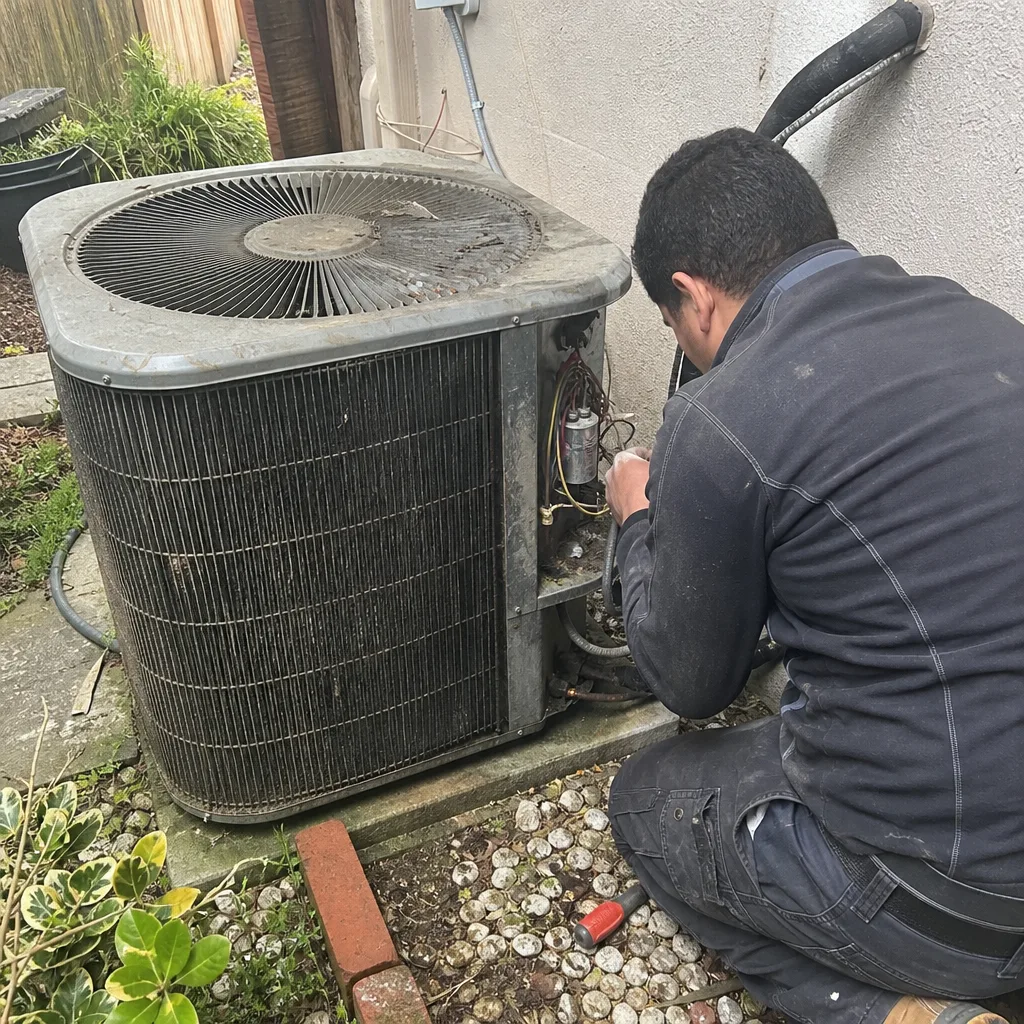 Before
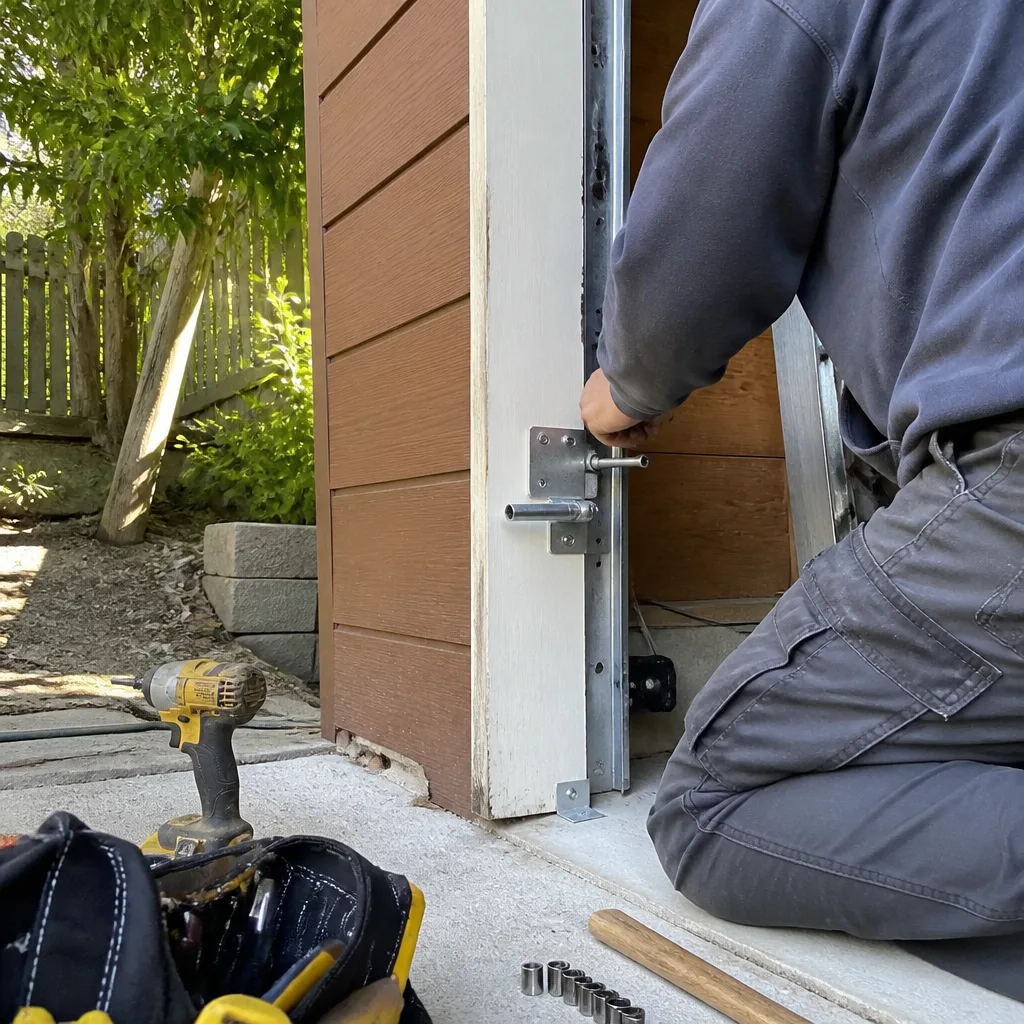 After
When to Call a Professional
Call a professional when the scope is beyond what you can safely or competently do in the first hour. That includes any active roof leak you cannot tarp safely, any burst pipe inside a wall rather than under a sink, any foundation drainage issue involving groundwater or standing water in a crawl space, and any gas line concern beyond shutting off the meter. Electrical issues involving water contact, smoking outlets, or circuit failure should always be evaluated by a licensed electrician. Foundation movement, visible crack widening, or doors that suddenly will not close after heavy rain warrant a structural assessment. San Mateo Construction offers free estimates in San Mateo, call (855) 901-7266 to schedule yours.
Frequently Asked Questions
Roof leaks during winter storms are the most common construction emergency in San Mateo homes, followed closely by burst pipes and foundation drainage failures. The combination of mature trees, marine layer moisture, and seasonal atmospheric rivers means roofs take sustained abuse from November through March. Most roof leaks start at flashing points, not at the roof membrane itself.
Emergency water damage repair in San Mateo typically ranges from $2,500 to $15,000 depending on the extent of the water migration, with full remediation of hidden wall and subfloor damage often running higher. A small contained leak under a sink might cost under $1,000, while a burst pipe that saturates multiple rooms, a crawl space, and the subfloor can easily exceed $25,000 once drying, mold prevention, and reconstruction are complete. Call (855) 901-7266 for an exact quote on your specific situation. Estimates are free.
Most homeowner policies in San Mateo cover sudden and accidental water damage from burst pipes and storm-related roof breaches, but slow leaks, poor maintenance, and pre-existing drainage issues are typically excluded. The key distinction is whether the damage was sudden and accidental or the result of deferred maintenance. Document everything from the first hour, and call your adjuster before you make permanent repairs.
Ask for the contractor’s California license number, then verify it on the Contractors State License Board website, where you can check the license status, classification, bond, workers’ compensation insurance, and complaint history. Any contractor performing residential work over $500 in labor and materials must hold a valid CSLB license. Do not accept a business card with a license number on it without verifying it independently.
Roof storm damage repairs in San Mateo typically take 2 to 5 days once materials arrive, while interior water damage remediation takes 3 to 7 days for drying and another 2 to 4 weeks for reconstruction depending on the scope. The timeline depends on the extent of damage, material availability, and the contractor’s schedule. During peak storm season, expect some delay in scheduling, which is another reason to have contractor relationships in place before you need them.
Yes, a licensed general contractor in San Mateo can coordinate the emergency response and the complete rebuild under a single contract, managing the trade specialists, material procurement, and quality control from initial mitigation through final finish work. This single-source accountability eliminates the coordination burden during what is already a stressful situation. San Mateo Construction handles exterior and interior work, from roofing and windows to cabinetry and flooring, so the contractor who responds to your emergency can also complete your restoration. Call (855) 901-7266 to discuss your project. Estimates are free.
The Bottom Line
Construction emergencies in San Mateo reward preparation and punish delay. The decisions made in the first hour, where the water shutoff is, whether you document before you demo, which contractor you call, determine whether the incident becomes a manageable repair or a drawn-out insurance fight. Know your home’s systems before they fail. Build your emergency data sheet this weekend. Verify contractors before you need them. Have materials on hand before the next atmospheric river. And when the scope exceeds your comfort level, call a professional. San Mateo Construction has been serving San Mateo since 2018, with full exterior-to-interior capability and a curated portfolio of name-brand materials from GAF and Owens Corning roofing to James Hardie siding and Cambria countertops. One contractor, every system, from roofline to foundation.
Written by the team at San Mateo Construction home, serving San Mateo since 2018.