
Last updated October 31, 2026
 Home additions & ADU
 Kitchen remodeling
 Bathroom remodeling
 Roofing
 Windows & doors
 Driveway & pavers
 Fence
Free written scope consultation - allowances, timeline, and change-order rules on paper before a single trade is scheduled
DIY vs Professional Construction: The San Mateo Homeowner’s Decision Guide
Here’s something most YouTube tutorials won’t tell you: in California, the legal line between what you can do to your own house and what requires a licensed contractor isn’t drawn by skill. It’s drawn by the Contractors State License Board, your insurance policy, and the Residential Purchase Agreement you’ll sign when you sell. In San Mateo, where homes routinely sell for $1.5 million to $3 million-plus depending on the neighborhood, that disclosure form isn’t a formality. It’s a document that can cost you six figures if a buyer’s inspector finds owner-performed work done without permits. This guide covers what you can legally and safely DIY, what you shouldn’t, how to calculate the real cost of doing it yourself, and where the smart middle path lies. For how to hire a construction contractor in San Mateo, see our step-by-step guide.
Quick Answer
If the work is cosmetic (paint, tile, trim, landscaping) and doesn’t touch structure, electrical, plumbing, or roofline penetrations, DIY is legally permissible and often fine. If it involves load-bearing walls, panel work, roof penetrations, gas lines, or anything requiring a permit beyond a basic homeowner permit, hire a licensed California contractor. In San Mateo specifically, seismic retrofitting requirements and strict resale disclosure rules push more projects into the professional category than homeowners expect.
Styles & brands we work with
Table of Contents
- The Legal Line: What California Law Actually Says
- The Resale Disclosure Trap Nobody Mentions
- Project-by-Project: DIY-Appropriate vs. Contractor-Required
- The Real Cost of DIY: Beyond Materials
- The Insurance Gap: What Your Policy Won’t Cover
- The Middle Path: Hybrid Projects That Save Real Money
- San Mateo-Specific Considerations: Seismic, Climate, and Code
- Common Mistakes to Avoid
The Legal Line: What California Law Actually Says
California Business and Professions Code Section 7044 contains the owner-builder exemption. It says a homeowner can act as their own general contractor on their own primary residence, pulling permits and performing or coordinating work themselves. That sounds broad. The restrictions catch people off guard.
First, the owner-builder exemption applies only to the home you live in (or intend to live in). If you’re renovating a rental property you don’t occupy, or flipping a house you never reside in, you cannot legally pull an owner-builder permit. The work requires a licensed contractor, full stop. The CSLB has fined homeowners in this exact situation, and several San Mateo County flippers have been caught on resale when permits traced back to owner-builder filings that didn’t match the facts.
Second, anyone you hire to help on an owner-builder project must be a licensed contractor or a legitimate employee you pay through payroll (with withholding, workers’ comp, and liability coverage). You cannot pay cash to a handyman to do work that requires a contractor’s license, and you cannot serve as an unlicensed contractor on your own project while hiring unlicensed help. The owner-builder exemption is for you doing the work, or you acting as general contractor coordinating licensed subcontractors.
Third, certain work sits outside the owner-builder exemption entirely. In San Mateo, that includes:
- Seismic retrofitting that involves foundation bolting or cripple wall bracing per San Mateo’s soft-story retrofit ordinance for certain building types
- Electrical service panel upgrades from 100 amp to 200 amp, which require PG&E coordination and a licensed electrician in almost every municipality
- Roof replacement on homes in certain San Mateo historic districts, where the city requires design review and contractor-specific documentation
- Any gas line work, which California law restricts to licensed plumbers or contractors holding specific classifications
In our experience, most San Mateo homeowners who run into legal trouble didn’t set out to break rules. They assumed a YouTube tutorial plus a weekend equals a permitted project. Our General Contractor Troubleshooting guide covers the common problems and fixes that trip up DIYers. The city of San Mateo’s building department is familiar with every owner-builder filing pattern and asks pointed questions when things don’t line up.
The Resale Disclosure Trap Nobody Mentions
California’s home remodeling disclosure laws are stricter than most states. When you sell, you complete a Transfer Disclosure Statement and, in many San Mateo transactions, a Supplemental Seller’s Checklist. Both ask directly: have you performed any work without permits? Have you acted as an owner-builder?
The buyer’s home inspector is trained to spot owner-performed work. Telltale signs include: slightly crooked tile lines with irregular grout spacing, electrical outlets wired with mismatched wire gauges, deck footings poured without inspection records, or a water heater installed without a permit sticker. In San Mateo’s competitive resale market, savvy buyers bring in inspectors who specifically look for these signals because they represent negotiation leverage.
Here’s what can happen when unpermitted owner work surfaces during escrow:
- Price reduction: Buyers frequently demand a credit for permitting, inspection, and correction costs, often calculated at 1.5x the estimated fix cost
- Lender issues: Some lenders will not fund a loan on a property with known unpermitted structural or electrical work, collapsing the deal
- Insurance problems: Buyer’s insurance underwriters may refuse coverage on a home with undisclosed owner-permitted alterations
- Legal exposure: Failing to disclose known unpermitted work is fraud under California Civil Code, with potential damages well beyond the sale price dispute
This is where the contractor decision intersects with asset protection. A licensed general contractor in San Mateo who pulls permits creates a paper trail that protects you at resale. The permit history shows inspected, code-compliant work. That’s worth real money when you sell.
Project-by-Project: DIY-Appropriate vs. Contractor-Required
Let’s be specific about what falls on each side of the line in San Mateo. This isn’t a skill assessment. It’s a legal, safety, and resale-value assessment.
Genuinely DIY-Appropriate Projects
These projects don’t require permits, don’t touch systems that can hurt you or the next owner, and allow skill development without expensive consequences for mistakes:
- Interior painting – zero permit, forgiving learning curve, easily corrected
- Tile backsplashes – non-structural, non-wet-area-tile, errors are cosmetic
- Landscaping and hardscaping – as long as you’re not altering drainage patterns or building retaining walls over 3 feet (which triggers a permit in San Mateo)
- Trim, casing, and baseboard installation – finish carpentry that doesn’t touch structure
- Fixture swaps – replacing a faucet, a light fixture, or a toilet using existing connections
- Cabinet hardware and minor cosmetic updates – hinges, pulls, soft-close retrofit kits
Contractor-Required or Strongly Recommended
These carry consequences that outweigh any labor savings:
- Roof penetrations and roof replacements – a single improperly flashed skylight or vent leaks into your attic for months before you notice. In San Mateo’s winter rains, that means rot, mold, and insulation replacement. Roofing work on homes in San Mateo’s hillside neighborhoods adds slope and wind exposure complications. If you’re re-roofing, you’re also choosing among GAF, CertainTeed, and Owens Corning systems, each with specific installation requirements that affect warranty validity.
- Electrical panel work – replacing or upgrading a panel, adding circuits, or running new wire requires a permit and inspection. Getting it wrong risks fire. PG&E won’t reconnect service to a DIY panel without an inspection sign-off.
- Structural modifications – removing or cutting into any wall without confirming whether it’s load-bearing is the most common expensive DIY mistake we see. In San Mateo’s older homes (many built 1920s-1950s), wall removal often means installing engineered beams with new footings.
- Wet-area tile with waterproofing – a DIY shower that leaks will rot the subfloor and framing. Professional-grade installation uses Schluter waterproofing systems or equivalent, not just cement board and hope.
- Foundation work – this is never DIY. San Mateo’s seismic zone and clay-heavy soils in certain neighborhoods make foundation work a licensed-engineer domain.
- Gas appliance moves or additions – gas leaks kill. This is a licensed plumber or contractor matter in every California city.
The Judgment Call Zone
Some projects sit in a middle zone where your skill level actually matters:
- Flooring installation – luxury vinyl plank is forgiving; hardwood requires moisture testing and acclimation knowledge; natural stone tile over wood framing requires deflection analysis. We’ve seen DIY hardwood installations in San Mateo sunrooms buckle within one season due to humidity swings the installer didn’t account for.
- Interior door replacement – pre-hung doors are manageable; retrofitting a door into an out-of-square 1950s opening is where patience and experience matter.
- Deck building – a ground-level deck is straightforward; an attached elevated deck requires proper ledger flashing, footing depth below frost line, and in San Mateo, lateral bracing for seismic loads.
The Real Cost of DIY: Beyond Materials
Most DIY cost comparisons stop at materials versus contractor labor. That’s the wrong calculation. Here’s the honest math for a typical San Mateo project, using a bathroom remodel as the example:
- Tool rental and purchase: a wet saw for tile ($80-$120/day), a demolition hammer ($60-$90/day), a drywall lift, an oscillating multi-tool, a laser level. A mid-range bathroom remodel can require $600-$1,200 in specialty tools you’ll never use again.
- Learning-curve material waste: first-time tile installers typically waste 20-30% of tile to miscuts and layout mistakes. On a $1,500 tile order, that’s $300-$450 in waste. Add drywall mud waste, trim recuts, and plumbing fitting mistakes.
- Permit fees: an owner-builder pulling their own permit for a bathroom remodel in San Mateo pays the same city fees a contractor would, roughly $750-$1,500 depending on scope, plus school district fees on certain projects.
- Time: a contractor crew completes a bathroom remodel in 3-4 weeks. A homeowner working weekends typically takes 3-6 months. If you value your time at even $25/hour, that’s $6,000-$12,000 in opportunity cost, during which you’re also living without that bathroom.
- Redo risk: if the work fails inspection or fails later, you pay for demolition plus professional correction. A failed DIY shower waterproofing job often costs more to fix than the original professional installation would have.
- Resale risk premium: the disclosure issue discussed above. Quantify it as 1-3% of your home’s value in negotiation losses if unpermitted work surfaces.
The honest conclusion: DIY saves real money only on projects under roughly $3,000 in professional cost, where the tool investment is low, the failure consequence is cosmetic, and the learning curve is shallow. Above that threshold, the risk-adjusted math increasingly favors professionals.
The Insurance Gap: What Your Policy Won’t Cover
This is the section most DIY guides skip, and it’s the one that keeps us up at night.
Your homeowner’s insurance policy covers sudden and accidental damage: a pipe bursts, a tree falls on the roof, a fire starts in the kitchen. It does not cover damage caused by faulty workmanship. If your DIY plumbing connection fails and floods the kitchen, your insurer will investigate. When they determine the leak was caused by work you performed incorrectly, they can deny the claim. You’re now paying for water damage remediation, cabinet replacement, flooring, and mold treatment out of pocket.
Contrast that with a licensed contractor’s home renovation work. A California-licensed contractor carries general liability insurance that covers property damage caused by their work. They also carry workers’ compensation insurance, which matters if a worker is injured on your property. If you hire unlicensed help and that person gets hurt on your job site, you can be personally liable for their medical bills and lost wages under California’s workers’ comp laws, which treat you as the employer.
The insurance question also extends to the building process itself. If a contractor’s mistake causes a fire (a torch-down roofing error, a wiring mistake), their liability policy responds. If your own mistake causes the same fire, your insurer may deny the claim on the grounds that the damage arose from your own negligent work.
Before starting any DIY project that touches plumbing, electrical, or roofing, call your insurance agent and ask one question: “If I perform this work myself and it fails, is the resulting damage covered?” Get the answer in writing. Many San Mateo homeowners are shocked by the answer.
The Middle Path: Hybrid Projects That Save Real Money
The binary “DIY or hire a contractor” framing misses the option most experienced San Mateo homeowners actually use: working with a contractor on the technical elements while handling manageable pieces themselves.
Here’s how this works in practice, using a kitchen remodel as the example:
- You handle: demolition of the existing backsplash and countertops (with contractor guidance on what not to touch), appliance removal to the garage, finish painting after cabinet installation, hardware installation on new cabinets.
- The contractor handles: cabinet installation and leveling, countertop templating and installation, plumbing rough-in and fixture connection with Kohler, Grohe, Toto, or Moen fixtures, electrical work, drywall, and tile with proper waterproofing.
- The savings: on a typical $45,000 San Mateo kitchen remodel, handling demolition, painting, and hardware can save $3,000-$5,000. That’s real money without assuming material risk.
The hybrid model works because you’re not trying to master six trades. You’re taking on one or two labor-intensive but low-risk tasks while the professional handles the systems that fail expensively. A good contractor will work with you on this. We regularly walk San Mateo homeowners through exactly which parts of a project they can safely self-perform and which parts they shouldn’t touch, and we build that division of labor into the contract. See our General Contractor Maintenance Checklist for San Mateo Homeowners for a practical framework.
What doesn’t work is the reverse: hiring someone cheap to do the technical work while you “just handle the finish stuff.” Finish work is where the visible quality shows. If you’re going to hire help, hire it for the technical systems. Your paint job won’t flood the house.
San Mateo-Specific Considerations: Seismic, Climate, and Code
San Mateo adds layers to the DIY decision that generic guides miss. Three factors matter here more than in most California cities.
Seismic requirements. San Mateo sits on the Hayward Fault zone’s western edge, and the city has adopted seismic retrofit requirements that go beyond state minimums. Many homes built before 1980 lack foundation bolting and cripple wall bracing. Any structural project, including additions and San Mateo Construction home remodels that open walls, triggers a review of the home’s lateral system. Professional contractors know which retrofit details the city’s building department expects. Homeowners rarely do, which leads to plan check rejections and frustrated owner-builder experiences.
Wet winter climate. San Mateo gets 25-30 inches of rain in an average year, concentrated in November through March. Any project involving exterior penetrations (roofing, windows, siding, vents) has a narrow working window and a high consequence for error. A DIY roof repair done in October gets tested by January storms. If it fails, you’re paying for interior damage plus a professional repair during the rainy season when contractors are busiest and prices are highest.
Window and siding choices. San Mateo’s microclimates vary block to block. Homes in the hills get more wind and sun exposure than those in the flats near downtown. If you’re replacing windows or siding yourself, you need to choose products rated for the exposure. PGT and Therma-Tru windows have specific coastal and wind ratings that matter in this market. James Hardie siding performs differently in San Mateo’s marine air than wood siding does. These aren’t decisions to make from a big-box store aisle.
One more local factor: San Mateo’s permit office is responsive but thorough. They inspect. They ask for corrections. An owner who’s never been through a San Mateo plan check or inspection often underestimates how much back-and-forth is normal. Contractors who work in the city weekly know what the inspectors look for and build to that standard the first time.
Common Mistakes to Avoid
- Assuming “small” means “no permit needed.” In San Mateo, even some seemingly minor work triggers permits: water heater replacement, window replacement that changes opening size, any electrical work beyond fixture swaps. Check with the city before you start, not after.
- Hiring unlicensed help for licensed work. Paying a Craigslist handyman $25/hour to do electrical or plumbing work is illegal in California and leaves you fully liable for their injuries, their mistakes, and your disclosure obligations. The savings disappear the first time something goes wrong.
- Underestimating the learning curve on tile and drywall. YouTube makes tile look easy. What you can’t learn from video is the feel for proper thinset consistency, the muscle memory for consistent trowel angle, and the judgment to know when a surface isn’t flat enough. Drywall mudding is similarly a feel-based skill. Your first room will look like a first room.
- Starting demolition before checking for asbestos and lead. San Mateo homes built before 1978 may have lead paint. Homes built before 1980 often have asbestos in flooring, popcorn ceilings, or insulation. Disrupting these materials without testing creates a health hazard and a disposal problem. Professional contractors test first.
- Skipping the permit to save money. The permit fee on a $20,000 project might be $1,200. The unpermitted work discount you’ll give a buyer later will be far larger. Permits are cheap insurance against resale losses.
- Doing structural work without understanding load paths. Removing a wall is not the hard part. Understanding what that wall was holding up, and installing an engineered beam with proper point loads and footings, is the hard part. Get this wrong and you get sagging floors, cracked drywall, and a very expensive correction.
- Ignoring the insurance question. Most homeowners never call their insurer before a DIY project. When the project fails, they learn the hard way that faulty workmanship is excluded. Make the call before you make the first cut.
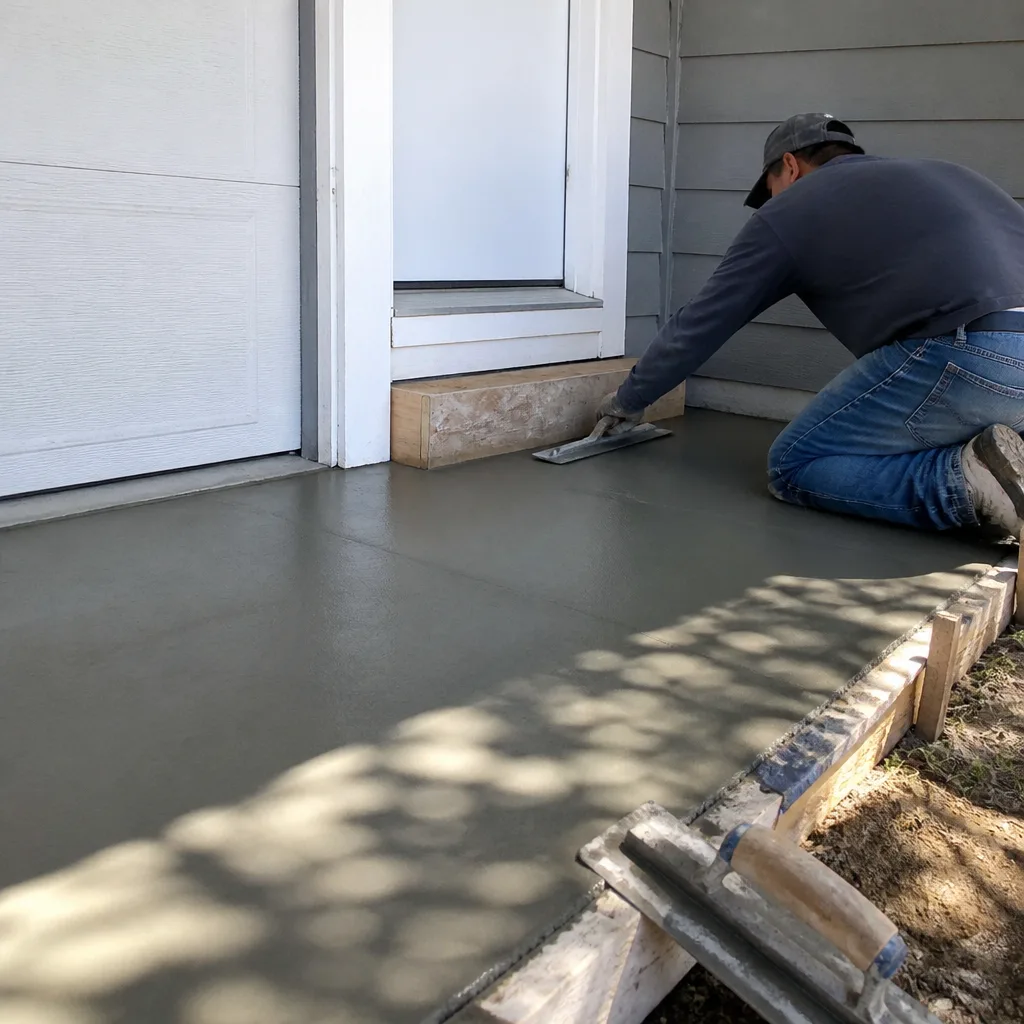
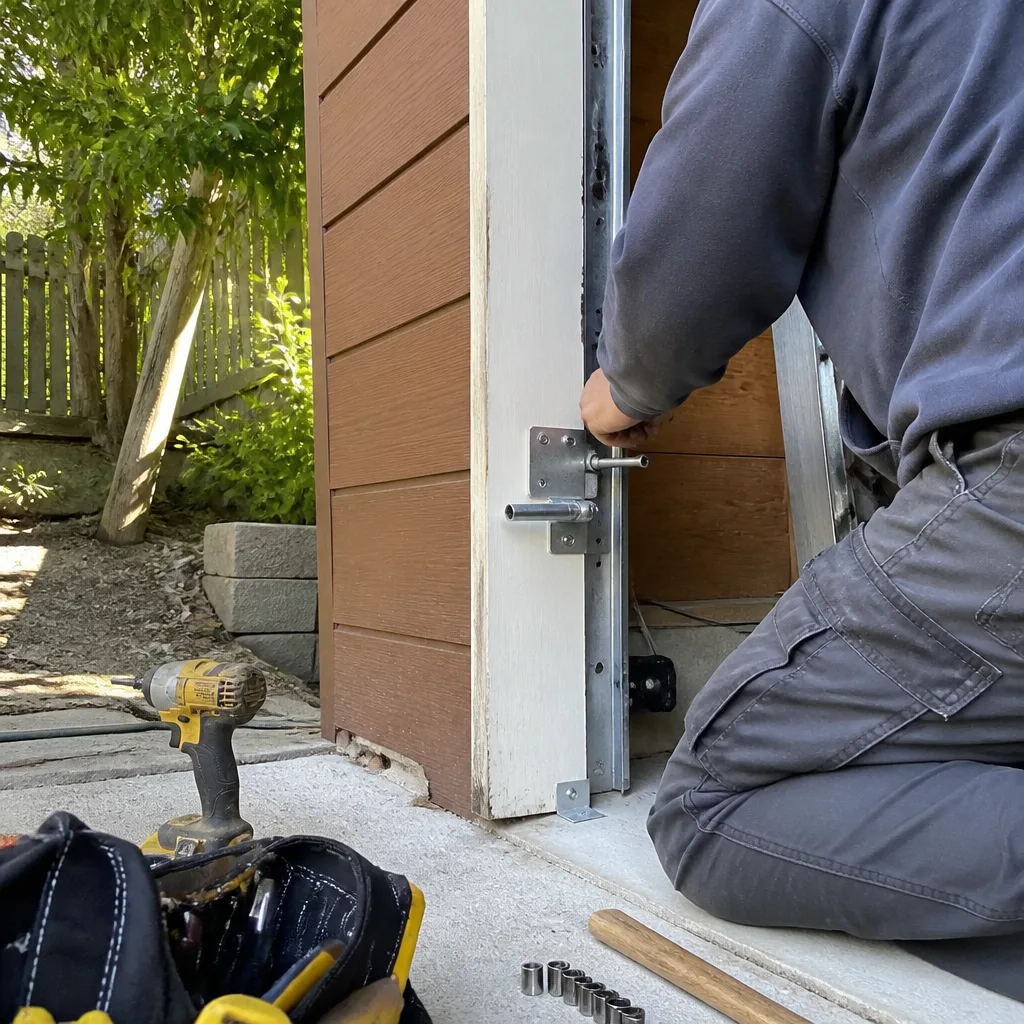
See the difference
 Before
 After
 Before
 After
 Before
 After
When to Call a Professional
Here’s the short version: if the project involves load-bearing structure, electrical panels or wiring additions, gas lines, roof penetrations, wet-area waterproofing, foundation work, or anything that will be inspected for code compliance at resale, call a licensed contractor. The cost of professional work is not just paying for labor. It’s paying for the permit history, the liability insurance, the warranty on workmanship, and the clean disclosure at resale. In San Mateo’s market, those items hold real financial value at closing. San Mateo Construction offers free estimates in San Mateo. Call (855) 901-7266 to schedule yours.
Frequently Asked Questions
Yes, California’s owner-builder law permits a homeowner to pull permits for work on their primary residence, provided they either perform the work themselves or hire licensed subcontractors. The work must be on a home you live in, not a rental or flip property, and any help you hire must be properly licensed and insured.
You must disclose it on the Transfer Disclosure Statement, and the buyer’s inspector will likely identify it regardless. Undisclosed unpermitted work is fraud under California law. Disclosed unpermitted work typically results in a price reduction, a repair credit, or a deal collapse depending on the work’s scope and the buyer’s lender requirements.
On truly cosmetic projects under $3,000, DIY can save 60-80% of professional cost. On projects between $3,000 and $15,000, factoring in tools, waste, time, and redo risk, realistic savings drop to 20-40%. Above $15,000, the risk-adjusted savings often approach zero or go negative when you account for resale disclosure implications.
Shower waterproofing failures are the single most expensive DIY mistake we see. A shower that leaks behind the tile can rot floor joists, subfloor, and framing for months before the homeowner notices. The correction often requires complete demolition, structural repair, and a professional redo costing more than the original professional installation would have.
Yes, selective demolition is one of the best money-saving DIY opportunities, but only with contractor guidance. Your contractor can mark what’s safe to remove and what to avoid (load-bearing elements, electrical, plumbing, hazmat materials). Doing unguided demolition on a San Mateo home built before 1980 risks disturbing asbestos and lead paint.
Generally no. Homeowner’s insurance covers sudden and accidental damage, not damage caused by faulty workmanship. If your DIY electrical, plumbing, or roofing work fails and causes damage, your insurer may deny the claim after investigating the cause. A licensed contractor’s general liability policy covers damage caused by their work instead.
The Bottom Line
In San Mateo, the DIY decision is less about your skill level and more about the legal, insurance, and resale consequences attached to the work. Cosmetic projects remain safely in the homeowner’s domain. Anything touching structure, electrical panels, gas, roof penetrations, or wet-area waterproofing belongs with a licensed contractor. The hybrid approach handles the space between: you take demolition, painting, and hardware; the professional handles technical systems. Whatever you decide, pull the permits, call your insurer, and document everything. Your future sale will thank you. For more guides & resources, visit our blog.
Written by the team at San Mateo Construction, serving San Mateo since 2018.