
Last updated October 31, 2026
 Home additions & ADU
 Kitchen remodeling
 Bathroom remodeling
 Roofing
 Windows & doors
 Driveway & pavers
 Fence
Free written scope consultation - allowances, timeline, and change-order rules on paper before a single trade is scheduled
Construction Warning Signs: A San Mateo Homeowner’s Reference Guide
Ask any seasoned contractor in San Mateo what call they wish they’d received six months earlier, and you’ll hear the same answer: the horizontal crack in a foundation stem wall that got shrugged off as “normal settling.” It’s never normal. A hairline diagonal crack at a window corner might be a $400 stucco patch, or it might be the first visible evidence of a failing shear wall. This guide covers the warning signs that show up in San Mateo homes, from the El Cerrito hills to the flats near Bay Meadows, and how to tell which ones you can watch and which ones need a phone call this week. For more guides & resources, see our blog.
Quick Answer
The construction warning signs that matter most in San Mateo are horizontal foundation cracks, stair-step cracks in stucco, wood rot at window sills, efflorescence on concrete walls, and interior door gaps that appear suddenly. Most of these are caused by water moving where it shouldn’t be, and water in San Mateo is relentless. The rule: if a crack is horizontal, wider than 1/8 inch, or changes over 90 days, get it evaluated. Cosmetic hairline cracks under 1/16 inch that stay stable through a full rainy season are usually just the house doing what houses do.
Styles & brands we work with
Table of Contents
- The Tiered Reference Guide: Cosmetic, Monitor, Act Now
- Normal House Movement vs. Early Structural Failure
- Interior Warning Signs That Trace to Exterior Problems
- California Disclosure: What Sellers Must Report
- How to Document Warning Signs Over 90 Days
- What San Mateo’s Climate and Housing Stock Do to Houses
- When DIY Makes Sense and When It Doesn’t
- Common Mistakes to Avoid
The Tiered Reference Guide: Cosmetic, Monitor, Act Now
We’ve organized the warning signs homeowners in San Mateo most often ask about into three tiers. The tier system works because it forces a decision. A crack you can name and categorize is a crack you’re less likely to ignore. Here’s how we break it down.
Tier 1: Cosmetic – Document and Forget
- Hairline stucco cracks under 1/16 inch, especially vertical or V-shaped ones at window and door corners. These come from the stucco expanding and contracting with temperature. San Mateo’s coastal air keeps temperature swings moderate, so these should stay tight.
- Faint horizontal lines on interior drywall that appear and stabilize, usually from initial lumber drying. If they don’t grow over two seasons, they’re done moving.
- Small chips in concrete walkways or driveways from impact, not from soil movement. Look for smooth edges and no displacement.
- Minor surface rust on metal fence posts or gate hardware. Wipe it, paint it with a rust-inhibiting primer, and move on.
Tier 2: Monitor – Set a Calendar Reminder
- Vertical or stair-step stucco cracks between 1/16 and 1/8 inch. These can be the stucco reacting to normal house movement, but they can also indicate minor shear movement. Mark the ends with a pencil and photograph them.
- Efflorescence, the white powdery deposit on concrete foundation walls or retaining walls. It means water has moved through the concrete and left minerals behind. A light dusting is common in San Mateo after a wet winter. A heavy crust suggests ongoing moisture, not just seasonal dampness.
- Door or window gaps that appear seasonally. Wood swells in winter and shrinks in summer. If a door sticks every February but swings fine in August, it’s likely seasonal movement. If the gap is new and year-round, move it to Tier 3.
- Small patches of missing paint on exterior siding, especially on the south and west exposures that get more sun. Paint failure is a maintenance issue until the wood underneath starts softening.
Tier 3: Act Now – Call This Week
- Horizontal cracks in foundation walls or stem walls. Concrete foundations are designed to handle vertical loads. A horizontal crack means lateral pressure, usually from expanding soil or water-saturated ground, and it’s the single most misdiagnosed warning sign we see.
- Stair-step cracks wider than 1/8 inch, especially if they trace through the mortar joints in brick or block. This pattern shows the wall is moving differentially.
- Wood rot at window sills that goes deeper than surface paint. Push gently with a screwdriver. If it sinks in with light pressure, the rot is active and spreading. Water is getting behind the stucco or siding.
- Interior door jamb gaps that appear suddenly or widen over a few months. Doors don’t just drift. A frame that pulls away from the wall or a door that suddenly won’t latch is often the first interior signal of a foundation issue.
- A musty smell in one specific room that gets stronger after rain. This points to a leak in the roof, the wall, or the foundation, and the smell means mold is likely active somewhere in the assembly.
Normal House Movement vs. Early Structural Failure
The hardest call for a San Mateo homeowner is the one between “old houses move” and “this house is telling me something.” Both are true. Every house moves. The question is whether the movement is the kind the house was designed to tolerate or the kind that means a load path has been compromised.
Here’s the observational framework we use when we walk a home for the first time. None of it requires special tools.
- Direction matters more than length. A vertical crack in a concrete stem wall, even one that runs several feet, is usually a shrinkage crack from when the concrete cured. If the edges are still aligned, meaning one side hasn’t shifted relative to the other, it’s been stable for years and likely will stay that way. A horizontal crack, even a short one, is a different animal. It means the wall has felt sideways pressure.
- Displacement beats width. A crack that’s 1/16 inch wide but shows one edge proud of the other, offset by even a credit card’s thickness, is more concerning than a 1/8 inch crack where both edges are flush. Displacement means the two sides have actually moved relative to each other, not just pulled apart.
- Pattern repeats are a tell. One diagonal crack at a corner is likely thermal. Cracks at multiple corners on the same wall, or mirror-image cracks on opposite sides of the house, suggest a systemic force at work. Walk the perimeter and look for recurrence.
- Fresh edges mean active movement. A crack with sharp, clean edges is new or growing. A crack with paint in it and grayed, rounded edges has been there for years. Older homes in San Mateo often have a mix of both, and the fresh ones are the ones to note.
- Weather correlation is diagnostic. After one season of heavy rain in San Mateo, check again. If a wall crack widened only during the winter and stabilized in summer, the driver is almost certainly expansive soil, not settlement. The fix may be drainage-related rather than structural.
One more thing worth saying: settlement of a certain amount is normal. Every house compresses into its soil over the first few years. The distress is when one corner of the house continues to move while the rest of it has settled. That differential movement is what snaps wallboard, binds doors, and separates trim.
Interior Warning Signs That Trace to Exterior Problems
Most structural failures in San Mateo homes announce themselves inside the house before they’re visible outside. The interior warning signs are often written off as cosmetic because they’re small: a seam in the drywall, a door that needs a shove, a smudge near the baseboard. But when you map them to likely causes, the pattern tells a different story.
- Bubbling or peeling paint on interior walls and ceilings is water, almost always. The question is where it’s coming from. Peeling paint on a ceiling under a bathroom points to a plumbing leak or failed waterproofing above. Peeling paint on an exterior-facing wall points to water intrusion through the stucco or siding. Peeling paint at the baseboard on a slab floor points to moisture wicking up through the concrete, which in San Mateo often traces to missing or failed drainage on the outside.
- Door jamb gaps or a door that hangs up at the top can mean the header above the opening is deflecting or the floor below is heaving. Check whether the gap is at the top or the side of the door. A top gap that’s wider on one side means the frame is racking, not just settling.
- Musty smell in a specific room is often the first sign of a roof leak that hasn’t shown itself yet. San Mateo gets about 23 inches of rain a year, and it all falls between November and April. When a roof leak starts, the water runs along a rafter or through the insulation before it ever stains the ceiling. The smell reaches you first. If the smell is above a bathroom or laundry, check the exhaust ventilation. Plugged or underpowered vents trap moisture in rooms that generate it.
- Ceiling stains with a brownish ring are almost always roof leaks, not plumbing. Plumbing leaks tend to be continuous and show up as a spreading wet spot. Roof leaks are episodic, stained with dirt from the roofing materials, and they grow after storms. A well-known local pattern: leaks at roof penetrations like plumbing vents and chimneys, and at skylight curbs, which are the most common failure points in San Mateo roofing.
- Gaps between baseboards and the floor that appear along one wall or in one room suggest that side of the house is moving relative to the other, not that the baseboard installer did a bad job. Baseboards are the taut string of a house. When they show movement, something below or above is pushing.
- Cracked tile grout in a straight line across a floor or wall can signal deflection in the substrate. Tile doesn’t flex, so it telegraphs movement by failing along the line where the substrate flexes most. If the crack runs parallel to a structural beam, pay attention.
We’ve walked into too many San Mateo homes where a homeowner had painted over the same water stain three times in two years. Painting over the evidence doesn’t stop the water. It just buries the signal.
California Disclosure: What Sellers Must Report
If you’re a San Mateo seller, some of the warning signs in this guide are not optional topics. California’s real estate disclosure laws, specifically the Real Estate Transfer Disclosure Statement and the Supplemental Statutory Disclosure, require sellers to disclose material facts that could affect a home’s value or desirability. Material facts include known structural issues, water intrusion, mold, deferred maintenance, and repairs that were made without permits.
Here’s what that means in practical terms if you spot a warning sign before you list.
- Foundation cracks and structural movement are material. If you’ve noticed a crack in the stem wall and had someone look at it, or even just noticed it and thought about looking at it, you disclose it. A failed disclosure here is one of the most common sources of post-sale litigation in California.
- Water intrusion and mold are material, even if you “took care of it.” If you had a leak and the repair was cosmetic, painting over the stain without addressing the water source, that’s a disclosure event. The buyer’s inspector will find it anyway.
- Unpermitted work is material. A significant number of San Mateo homes have improvements that predate current permitting or were built without permits. If you know a room addition or a retaining wall was unpermitted, you must disclose it. A buyer’s lender can pull permit records, and it becomes a transaction problem rather than a repair problem.
- Soils and drainage issues are material. San Mateo has areas with expansive clay soils and areas with high water tables, particularly in the low-lying neighborhoods along the Bay. If you’ve had standing water in the crawlspace or yard drainage problems, disclose it.
- The timing matters. If you address a Tier 3 issue before listing, do the repair with permits where required and disclose the repair. A properly fixed problem is still a known issue, and California courts have been consistent: silence after a known structural repair is worse than disclosure of the repair.
The good news for sellers is that addressing a warning sign with a documented, permitted repair before listing often preserves more value than the repair costs. Buyers in San Mateo are doing inspections, and the inspectors know this housing stock. A documented repair is a selling point; an undisclosed pattern is a negotiation vulnerability.
How to Document Warning Signs Over 90 Days
Most warning signs don’t need an immediate contractor visit. They need evidence. The problem is that most homeowners take one photo, lose it in their camera roll, and rely on memory three months later. Memory is unreliable, especially when a crack has either doubled in width or not moved at all and you genuinely can’t remember which.
Here’s the documentation protocol we recommend. It takes under ten minutes per session and is accessible to anyone with a phone.
- Keep a crack log. A simple notebook entry with the date, the location, and one sentence describing the crack. Example: “March 3, garage south wall, stair-step crack at mortar line near the window, 3/32 inch wide at widest point.”
- Photograph with a scale reference. Place a nickel or a ruler against the crack before you take the photo. A crack with no reference point is hard to measure later. Take two photos per crack: one wide shot showing the crack in context, and one close-up with the scale reference.
- Mark the crack ends with a pencil line. On stucco, a light pencil mark at the current end of the crack shows growth with certainty. On raw concrete, use a small piece of painter’s tape above and below the crack as visual anchors.
- Revisit on a schedule, not when the mood strikes. After the first sighting, check at 30, 60, and 90 days. In San Mateo, one of those checks should fall after a heavy rain if possible, since moisture-driven movement shows up then.
- Record the weather pattern. A note in the log like “after three consecutive rainy days” or “mid-summer, no rain in 8 weeks” gives you context for what the crack is doing and why. Cracks that respond to rain are telling you about drainage and soil, not just settlement.
- If anything changes, call for an evaluation. The 90-day protocol is designed to catch movement early, not to serve as a reason to defer. If the crack has grown, if displacement appears, or if a new interior sign shows up, that’s the end of the monitoring phase.
A well-kept log has saved homeowners real money in San Mateo by giving a contractor something to work with on the first visit. We can evaluate a crack that has two documented measurements and a weather note faster and more accurately than one we’re seeing fresh for the first time.
What San Mateo’s Climate and Housing Stock Do to Houses
San Mateo houses share certain vulnerabilities that come from where they’re built and when they were built. Understanding these patterns helps you know which warning signs to expect.
First, the climate. San Mateo sits in a Mediterranean climate with a distinct wet winter and a long dry summer. The soil has months to shrink and crack and then receives weeks of concentrated rain. Houses in the hills around Sugarloaf Mountain and Laurelwood sit on expansive soils, clays that swell when wet and shrink when dry. This seasonal push and pull shows up as stair-step cracks in exterior walls and as doors that bind every winter.
Second, the housing stock. A large portion of San Mateo’s single-family homes were built between 1920 and 1970. These homes have had decades to settle, and most have settled into a stable state. The warning signs on these homes are more likely to come from water intrusion than from active structural movement: failing stucco at window penetrations, roof leaks at aging flashings, moisture wicking through original slab foundations that predate modern vapor barriers.
Third, the microclimates. Homes in the San Mateo Highlands get more afternoon sun and wind exposure than homes in the flats near downtown. South and west elevations take the brunt of the sun, which means paint failure and stucco movement appear on those walls first. Homes near the Bay deal with salt-air corrosion on metal flashing, fasteners, and hardware. The rust pattern tells you where the wind-driven moisture comes from.
Fourth, the renovation history. San Mateo is a high-value market, and many homes have been through multiple renovations. Some were done properly with permits and documentation. Some were not. We regularly find warning signs that trace to a previous renovation: a load-bearing wall removed without a beam, a window header undersized, a stucco patch that didn’t include proper flashing. When you see a warning sign that doesn’t match the rest of the house, the question isn’t just “what’s wrong now?” but “what was changed here, and how long ago?”
When DIY Makes Sense and When It Doesn’t
Some of the warning signs in this guide are fine to address yourself, once you know what you’re looking at. Others should never be touched without professional help. See our DIY vs Professional Construction: The San Mateo Homeowner’s Decision Guide for help deciding. Here’s the split.
Reasonable to handle yourself:
- Cosmetic stucco cracks under 1/16 inch. A tube of elastomeric patch and some matching paint is a reasonable Saturday project. Clean the crack, fill it, and follow the paint instructions for stucco. Products from Quikrete and Sakrete make this accessible to a careful DIYer.
- Surface rust on hardware. Wire brush, rust-inhibiting primer, and a good exterior paint. This is maintenance, not repair.
- Light efflorescence on a retaining wall or driveway. Dry-brush it off and monitor. If it comes back as a heavy crust, the moisture source needs attention.
- Re-caulking door and window frames. If you see a gap in caulk but no rot and no moisture, re-caulking is straightforward and prevents the rot from ever starting.
Call a professional, honestly, the first time:
- Horizontal foundation cracks or any crack with displacement. This is a structural question, and the answer determines whether you spend $400 or $40,000. Guessing wrong is expensive.
- Active wood rot at window sills or door thresholds. By the time rot is visible, water has been getting in for a while. The repair usually involves removing siding or stucco to fix the flashings, not just replacing the rotted wood.
- Any sign of mold on the interior side of a wall or ceiling. Mold inside a wall cavity is a health issue and a construction issue. You need to find the water source, not just kill the visible mold.
- Roof leaks around penetrations like chimneys, vents, and skylights. The flashing details on these are the most common failure point in San Mateo roofing, and they need to be re-flashed correctly, which is roof work and not a caulk line.
- Electrical or plumbing warning signs under any circumstances. These trades have their own codes and their own hazards. A bulge in a wall above a light fixture, a hot outlet cover, a drain smell that won’t go away, these are professional calls, no exceptions.
One note on the DIY instinct: the most expensive DIY repair we see in San Mateo is the painted-over water stain. It doesn’t stop the leak, it doesn’t address the mold, and it makes the eventual professional repair harder because the evidence has been buried. If you take away one thing from this guide, let it be this: the warning sign is the house talking. Covering it up doesn’t make it quiet.
Common Mistakes to Avoid
- Calling every crack “settling.” Settlement is a specific type of vertical movement, and it’s overused as an explanation for every house blemish. Diagonal and horizontal cracks have different causes and different consequences. In San Mateo, where literal settling has usually completed decades ago on older homes, a new crack usually isn’t settling.
- Painting over water stains. This is the most common deferral tactic we see, and it never ages well. The stain comes back, the leak continues, and the repair grows. Fix the water first, then the paint.
- Ignoring a musty smell because there’s no visible stain. Smell is an early detection system that works before the water reaches drywall. If a room smells like a basement after the first winter rain, trust it.
- Assuming a new home doesn’t need monitoring. San Mateo has seen significant new construction in recent years, and new homes settle on their own timeline. The first three years of a home’s life are when you should be most attentive to cracks, gaps, and movement, not least.
- Using the wrong patch material on stucco. Standard interior spackle or generic caulk fails on exterior stucco because it can’t flex. The repair looks good for one season and then cracks again, often worse. Use an elastomeric product designed for stucco or masonry.
- Waiting until the rainy season to address a leak. Roofers in San Mateo book out fast in the fall, and leak repairs are harder to do safely and correctly in wet conditions. If you suspect a roof issue, address it in summer when scheduling is easier and the repair can be done dry.
- Fixing a symptom without understanding the cause. Replacing a rotted window sill without fixing the flashing is a temporary cosmetic repair. Re-leveling a door without checking the foundation below is a missed diagnosis. The cause matters more than the symptom.
When to Call a Professional
If you’ve spotted a Tier 3 warning sign, a horizontal crack, displacement of any kind, active rot, or a recurring musty smell, get an evaluation. Use our General Contractor Troubleshooting: Common Problems and How to Fix Them to prepare for that call. If you’ve been photographing a crack and it’s growing, get an evaluation. If you’re selling and you’ve found something that falls into California’s disclosure requirements, get documentation from a contractor before you list.
San Mateo Construction offers free estimates in San Mateo. If you’d like a professional set of eyes on a worrying crack, a stain you can’t explain, or any of the warning signs in this guide, call us at (855) 901-7266 and we’ll come take a look.
See the difference
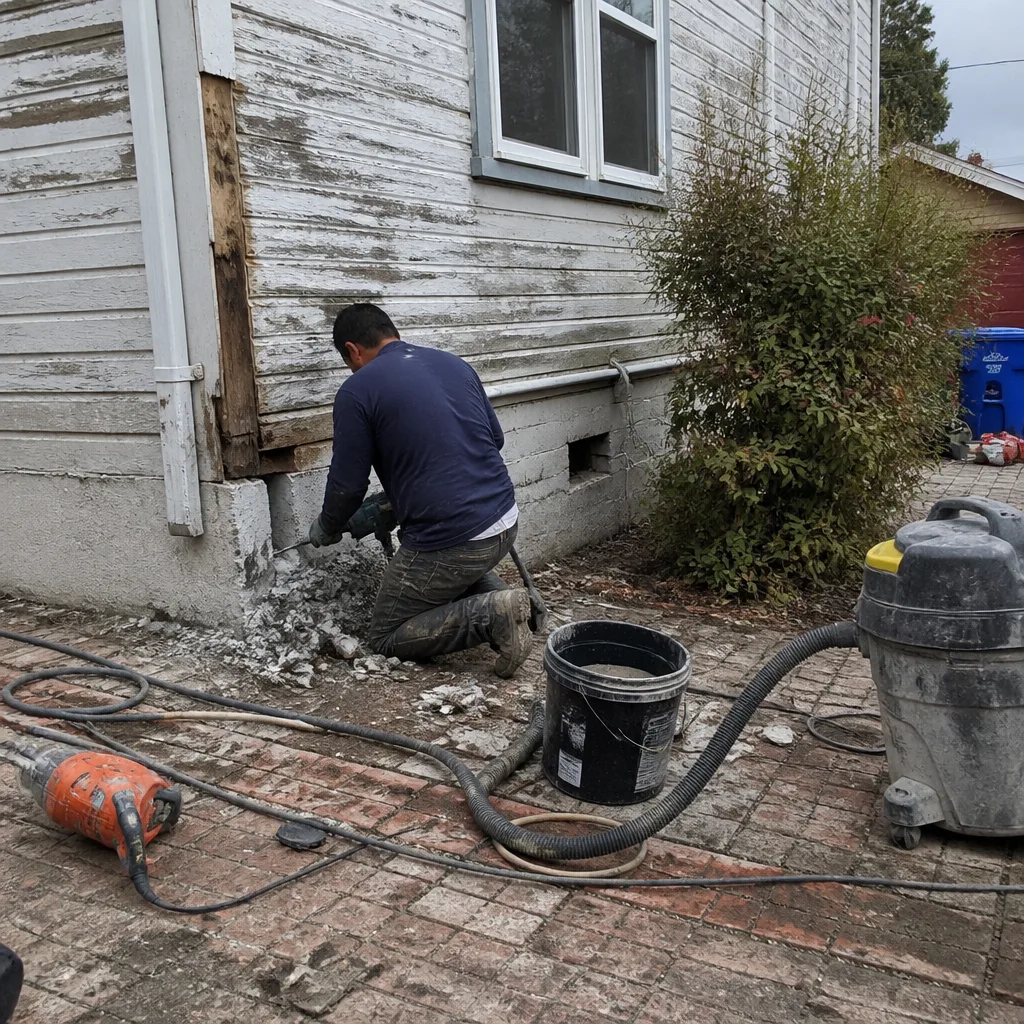 Before
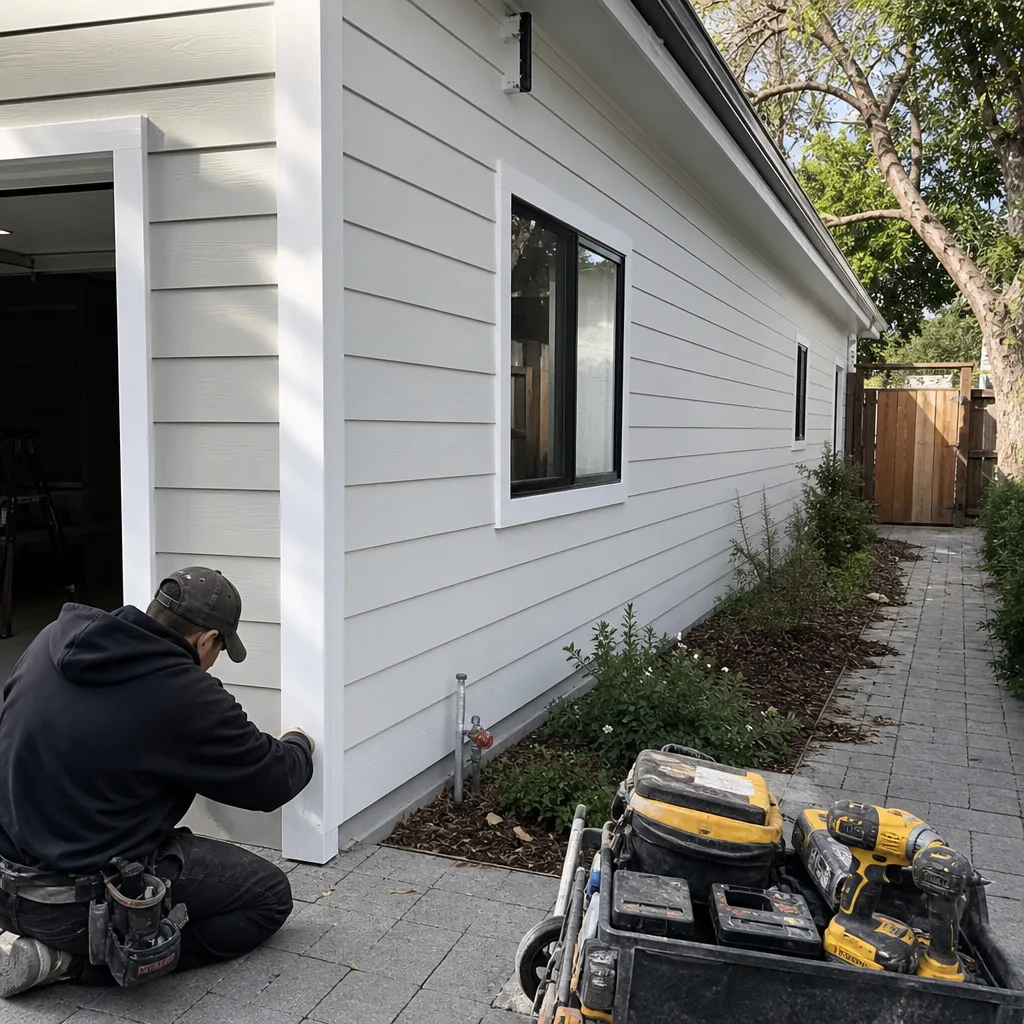 After
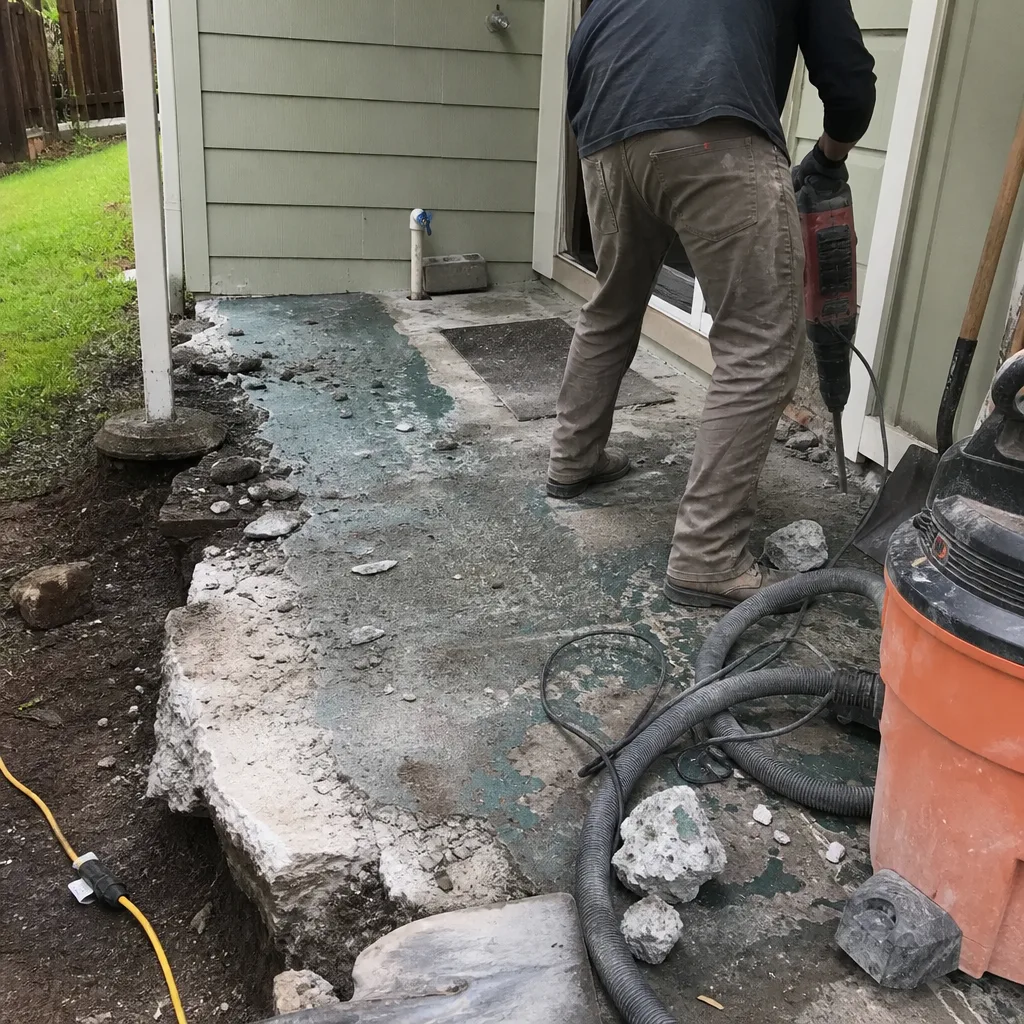 Before
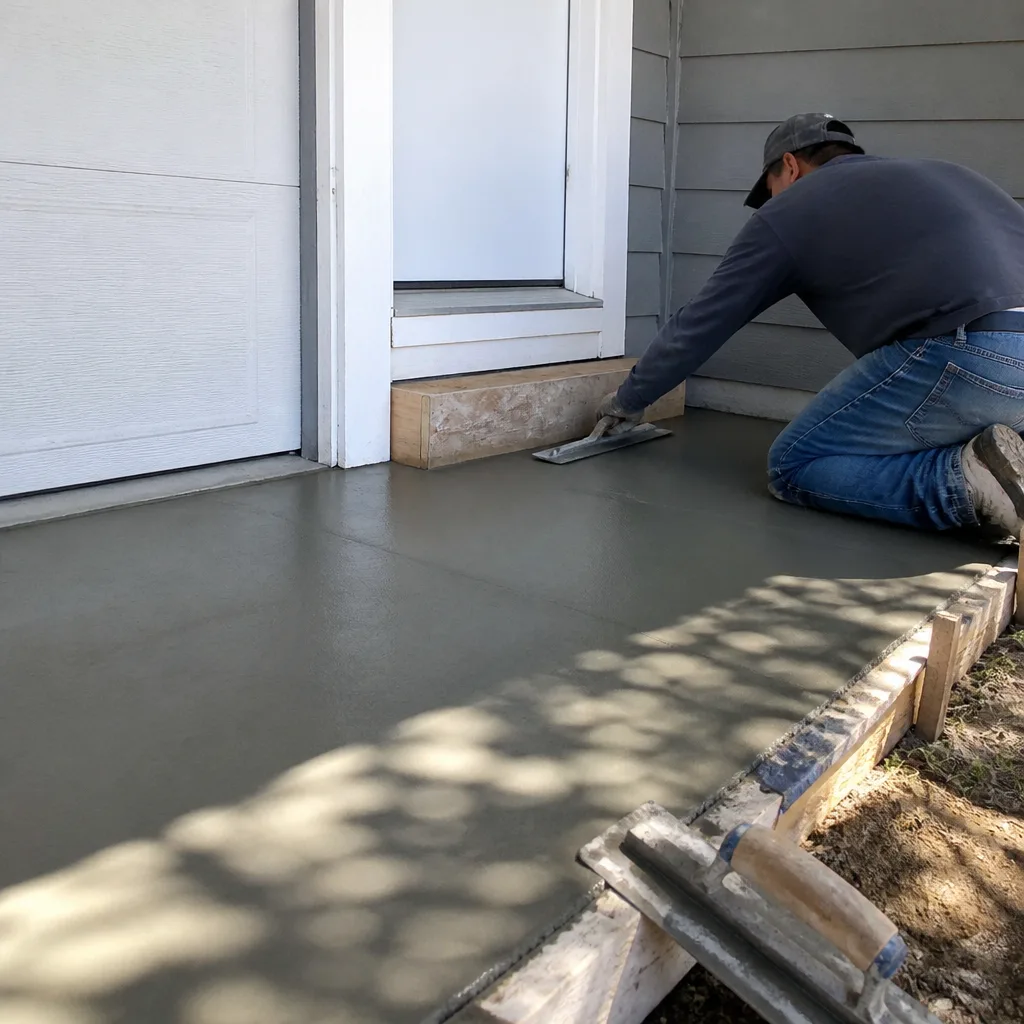 After
 Before
 After
Frequently Asked Questions
Foundation crack repair in San Mateo typically ranges from $400 for a simple epoxy injection of a stable vertical crack to $4,000 – $12,000 for horizontal crack repair involving wall reinforcement. The wide range exists because horizontal cracks often mean soil pressure that needs a drainage correction, not just a crack fill. Call (855) 901-7266 for an exact quote, and remember that a stable crack you’ve documented is a different project from one that’s actively moving.
A horizontal crack in a foundation or stem wall means the wall has experienced lateral pressure, usually from water-saturated soil or expanding clay. Foundations are designed for vertical load, so sideways force is not something they handle well. This is a Tier 3 warning sign in San Mateo, and it should be evaluated by a professional, especially if the crack runs a significant length or shows displacement.
Worry about stucco cracks when they’re wider than 1/8 inch, when they run diagonally across a wall in a stair-step pattern, or when they show displacement, meaning one side of the crack is no longer flush with the other. Hairline vertical cracks at window and door corners are usually cosmetic thermal movement and can be patched with an elastomeric filler. Call (855) 901-7266 if a crack is growing or if it appeared suddenly.
A musty smell in one specific room that gets stronger after rain is almost always moisture-related, whether it’s a roof leak, a wall intrusion, or a crawlspace issue. It’s not always a visible leak yet, because water can travel through building assemblies before it stains a surface. Trust the smell and investigate the likely sources before the stain appears.
In California, sellers must disclose any known material fact that could affect a home’s value or desirability, including foundation cracks, structural movement, water intrusion, mold, and unpermitted work. A documented, permitted repair is still a disclosure event, but it preserves more value than an undisclosed problem. If you’ve spotted any Tier 3 warning sign before listing, it’s worth having it evaluated and documented.
Photograph the crack with a scale reference, mark its ends with a pencil line on stucco or painter’s tape on concrete, and revisit every 30 days for 90 days. If the crack extends past your marks, that’s measurable growth. If displacement appears, that’s a more serious change. A 90-day documentation log is the most useful evidence you can bring to a contractor visit. Call (855) 901-7266 for an evaluation if the crack moves.
The Bottom Line
Warning signs in a San Mateo home are data. The house is telling you what’s happening to it, and the earlier you read the signals, the smaller the repair. A hairline crack that stays hairline for a decade costs nothing. A horizontal crack that goes unaddressed for two winters becomes a retaining wall project. The skill isn’t knowing everything about construction; it’s knowing which observations matter and acting before the cost multiplies. Document what you see, categorize it using the tiers in this guide, and call a professional when the evidence says the house is under stress. Our General Contractor Maintenance Checklist for San Mateo Homeowners can help you stay ahead of future issues.
About San Mateo Construction
We’re a licensed general contractor in San Mateo, and we handle projects from home remodeling to whole-home renovation to new ADU construction. Our team works with a curated portfolio of name-brand suppliers, including James Hardie siding, GAF and Owens Corning roofing, and PGT windows, so you’re never locked into one brand or one price tier. If you’re planning a repair or a larger project, start with our general contractor services page or visit the San Mateo Construction home page to see the full scope of what we do.
Written by the team at San Mateo Construction, serving San Mateo since 2018.